
Blog · Scheduling & attendance
Holiday Closures and Make-Up Sessions: A Policy Families Understand
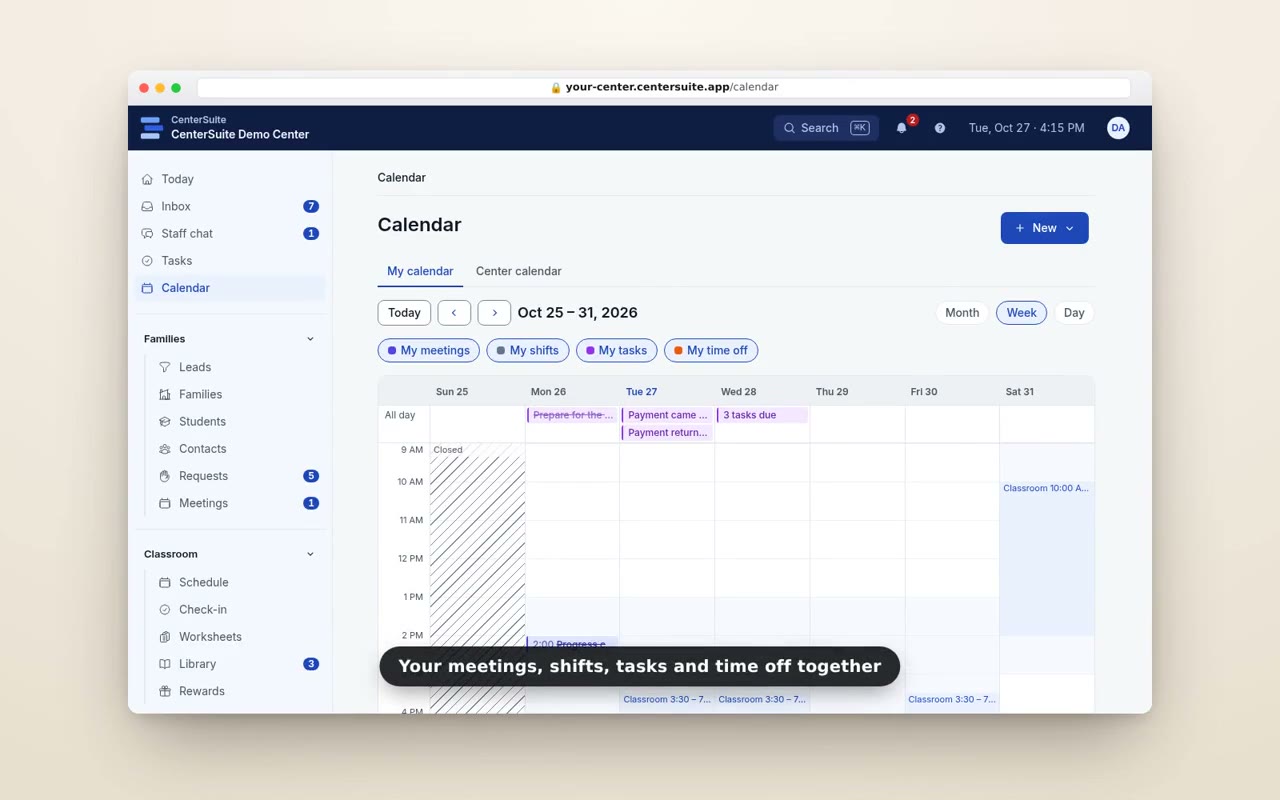
Every center closes sometimes. Thanksgiving, winter break, a long weekend, a snow day nobody saw coming. Each closure brings the same questions from families: Are you open on Monday? Does my child get a make-up? Am I still paying for that week?
None of these questions are unreasonable, and all of them are easier to answer before anyone asks. A clear closure calendar and a simple make-up policy save your front desk dozens of conversations every season.
Set the year's closures early
Before the school year starts, decide which days you'll close and put them on your calendar. Use your local school district's calendar as a guide, since families' schedules revolve around it, but make your own decisions: some centers stay open on school holidays because that's when families have time.
Share the list with families at enrollment and again before each break. When closures are known months ahead, families plan around them instead of being surprised.
Remind families before each closure
People forget. A short reminder a week before and again a day or two before each closure prevents the parent who drives over to a locked door. Keep it short: which days you're closed, when you reopen, and anything that changes (like an earlier pickup the day before).
Families should also be able to see upcoming closures on their own, wherever they check their schedule. The same automated reminders that cut no-shows work for closures too.
Have a plan for unplanned closures
Snow, power cuts, illness: some closures can't be scheduled. Decide now who makes the call, by what time, and how families will hear about it. A text is usually fastest, as long as families have opted in. Post the same message wherever families look, so the answer is the same everywhere.
Write a make-up policy you can actually keep
Make-up sessions are where good intentions turn into scheduling chaos. A few principles keep it manageable:
- Be clear about what's covered. Do center closures get make-ups? Do student absences? Many centers treat them differently, and that's fine as long as it's written down.
- Set a window. Make-ups within the same month, or the next few weeks, keep them from piling up.
- Make-up into open spots. Offer times where you have room and staff, not wherever a parent prefers.
- Keep a record. Note who is owed a make-up and when it was used, so nobody has to remember.
Whatever you decide, put it in your enrollment policies so families agree to it up front. Our guide to paperless enrollment covers getting that agreement signed and filed.
Don't forget your staff
Closures affect staff too. Decide ahead of time whether closed holidays are paid, and for whom, and make sure the schedule reflects it. Our piece on time clocks and payroll covers how that carries into the pay period.
Consistency is the whole policy
The best closure policy is the one you apply the same way every time. Families accept a lot when the rules are clear, shared early, and fair to everyone.
See how CenterSuite's schedule and calendar handle closures.
Keep reading
 Scheduling & attendance
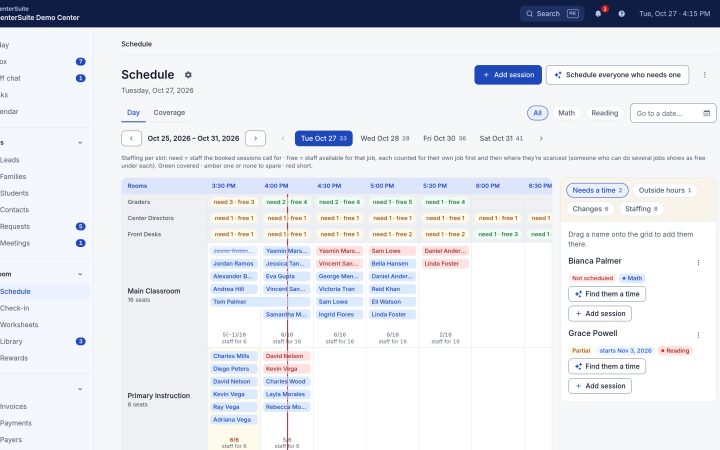
Class Scheduling for Learning Centers Without the Chaos
Recurring classes, one-off changes, capacity, and coverage collide on one grid. How to think about scheduling — and what software should handle for you.
 Scheduling & attendance
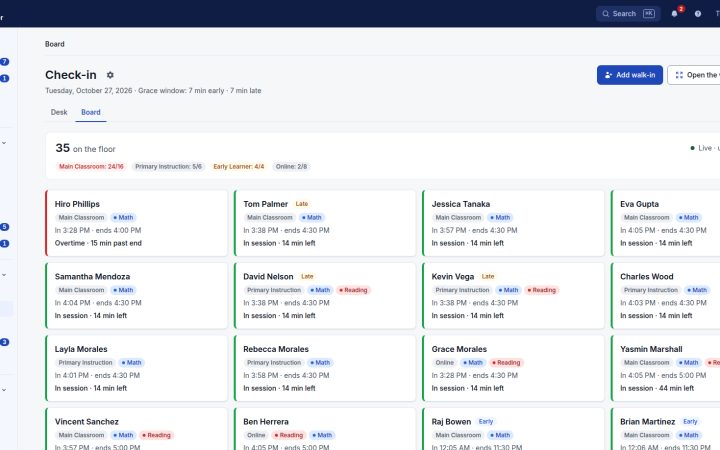
Attendance Tracking for Learning Centers: A Practical Guide
Paper sign-in sheets cost you money and visibility. What good attendance tracking looks like — and what to look for in attendance software.
 Scheduling & attendance
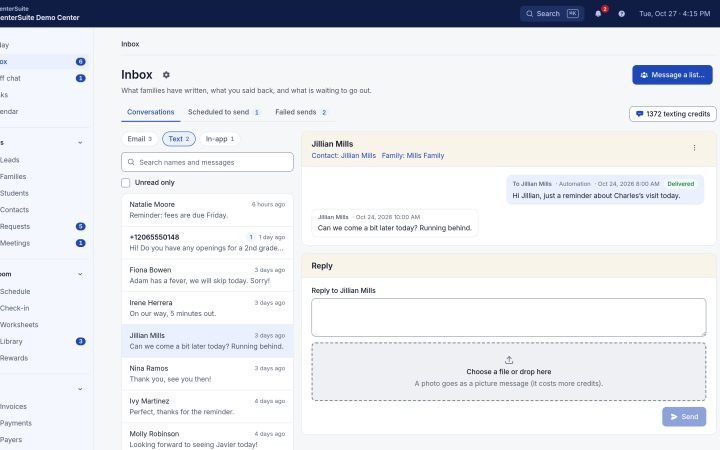
Cutting No-Shows with Automated Reminders
No-shows cost money and wreck your schedule. Automated reminders are the highest-leverage fix — here's how to do them right.