
Student Rewards That Motivate Without Becoming a Second Job
Almost every learning center has tried a rewards program at some point. A sticker chart, a points card, a prize shelf by the front desk. When it works, kids light up: they ask how many points they have, they push to finish one more page, and they remind their parents it's a center day.
When it doesn't work, it's usually not because kids stopped caring. It's because the program got too complicated for staff to keep up, and a reward system that isn't kept up is worse than none at all.
Decide what you're rewarding, and keep it short
Pick two or three behaviors that matter most to your center. Good candidates:
- Showing up. Regular attendance is the foundation of progress, and it's easy to count.
- Finishing the day's work. Completing an assignment, not just starting it.
- Effort and milestones. Reaching a new level, a test score, a streak of steady sessions.
Resist the urge to reward everything. Every new rule is one more thing a busy staff member has to remember in the middle of a full afternoon.
Make earning automatic where you can
The most reliable rewards are the ones nobody has to remember to give. If students earn points for attending, those points should follow from check-in, not from someone writing in a notebook afterward. If a new level earns a bonus, it should come from recording the level, not from a separate tally.
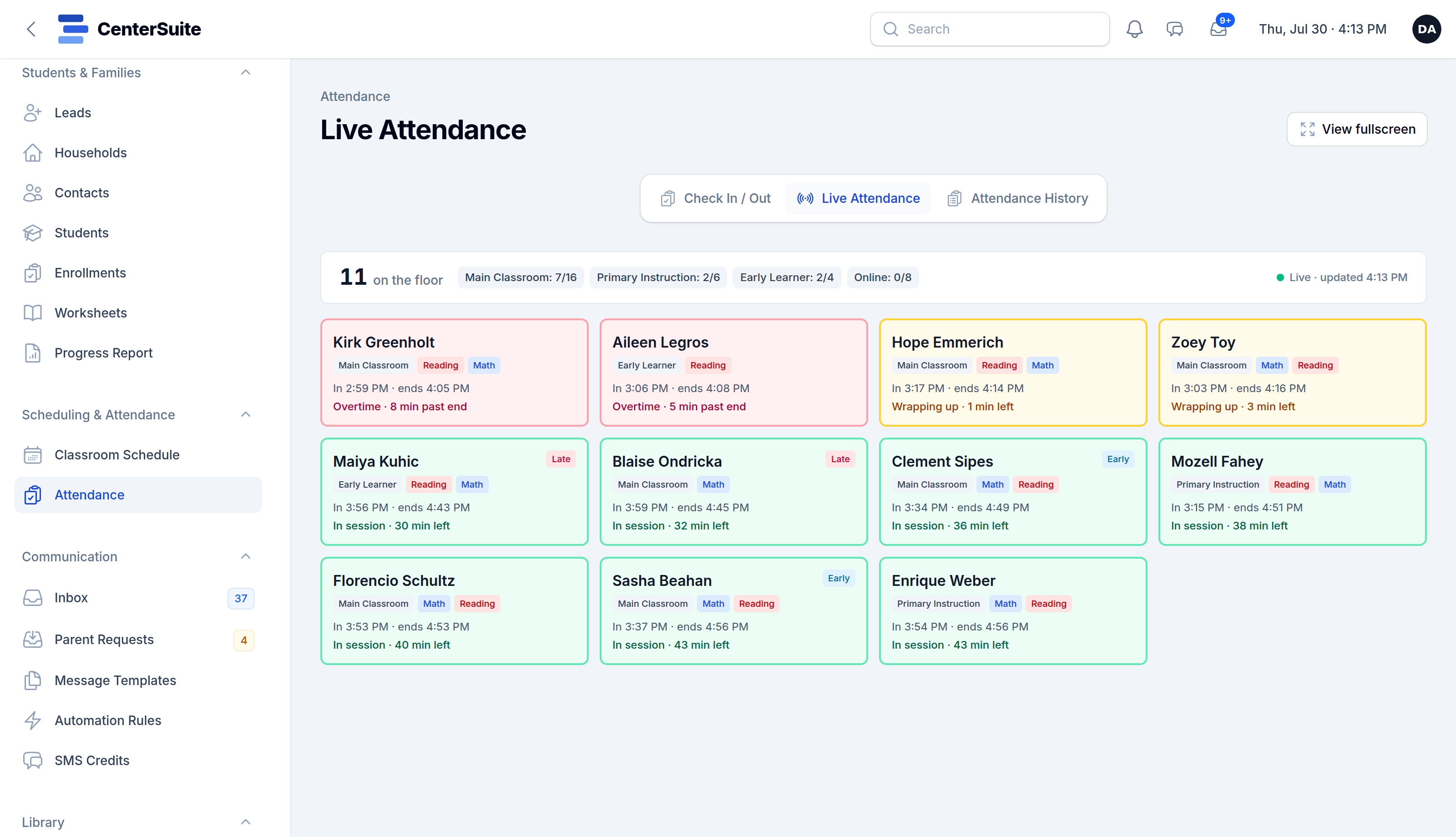
That's also why rewards fit naturally alongside good attendance tracking: when check-in is accurate, the points that depend on it are too.
Keep the prizes simple and the balance visible
Small, frequent rewards motivate younger students more than a big prize months away. A short list of prizes at a few price points works well: something small within a couple of weeks, something bigger after a month or two.
Make the balance easy to see. Students love checking their own total, and parents appreciate seeing it too. A balance a family can look up for themselves turns the program into a small, positive reason to stay in touch with your center.
Be consistent and fair
Kids notice immediately when one staff member hands out points freely and another never does. Agree on the rules as a team, write them down, and treat every student the same way. When you need to correct a mistake, fix the record rather than quietly adjusting the next award.
Let rewards support retention, not replace it
A good rewards program helps students build the habit of coming in and doing the work, and that habit is one of the strongest student retention signals you have. But points are a supplement to real progress, not a substitute for it. Families stay because their child is improving; rewards just make the improvement more fun along the way.
Share the wins, too. A quick note home when a student reaches a milestone does more than any prize. Our guide to automating parent communication has ideas for sending those notes without adding to anyone's workload.
See what else CenterSuite does for your students and families.
Keep reading
 Growing enrollment
Your Back-to-School Enrollment Checklist
The fall rush brings more inquiries than any other time of year. What to have ready before it starts, so no interested family stalls on the way in.
 Growing enrollment
Turning Inquiries into Enrollments: A Follow-Up Playbook
Most centers lose more families between inquiry and enrollment than anywhere else. A simple, repeatable playbook to convert more leads into students.
 Growing enrollment
Do You Need a CRM for Your Learning Center?
CRM sounds like enterprise software you don't need — but the job it does is one every center already struggles with. What it really means, and when it's worth it.