
Do You Need a CRM for Your Learning Center?
"CRM" — customer relationship management — sounds like something built for sales teams at big companies, not a learning center with a few hundred families. So Directors often assume it's not for them. But strip away the jargon and a CRM is just one thing: a single, organized place that remembers every family, every conversation, and every next step, so nothing and nobody falls through the cracks.
By that definition, every center already does CRM. The only question is whether it's done in a system, or in a tangle of spreadsheets, sticky notes, and memory.
The job a CRM actually does
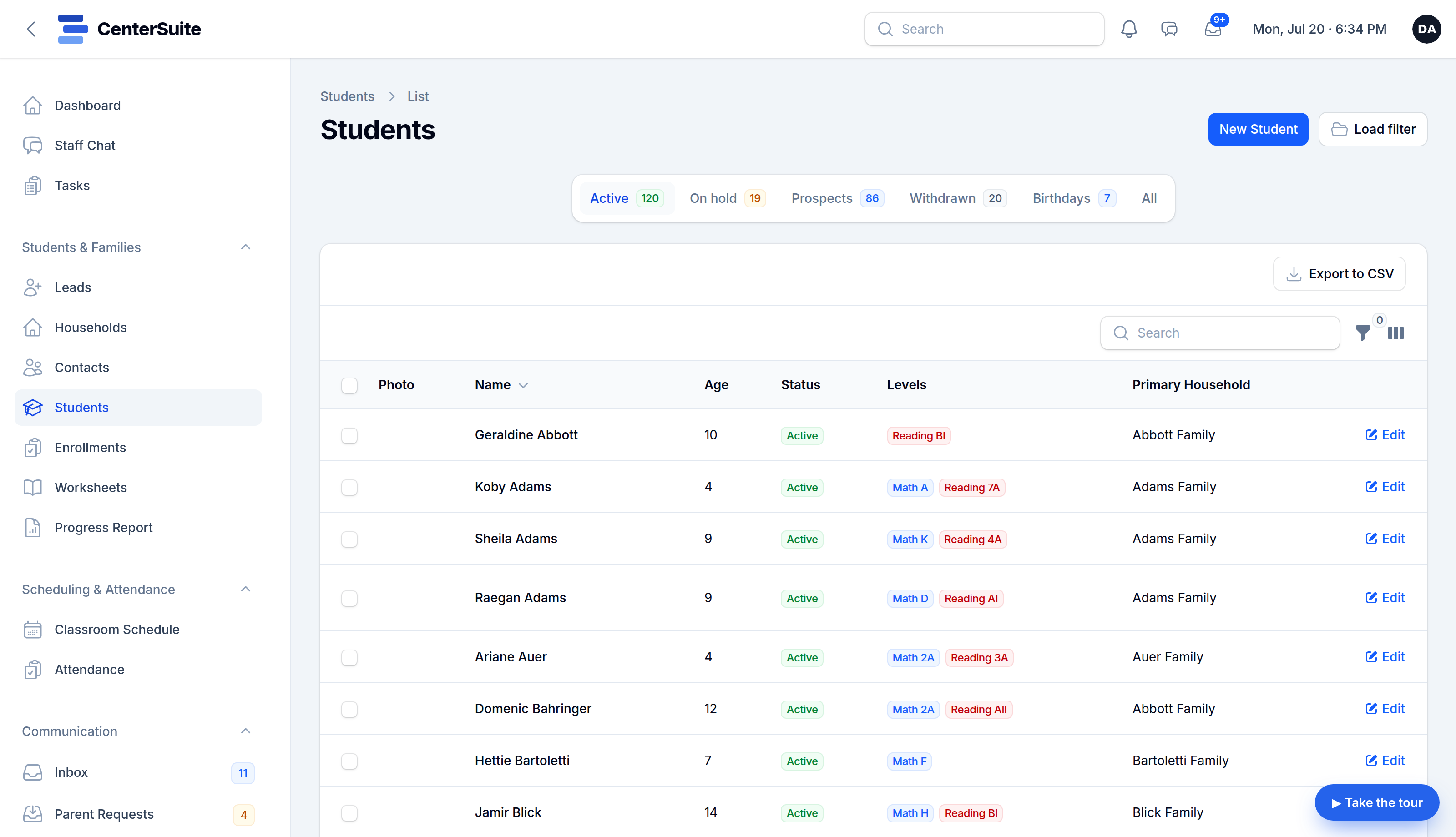
Think about everything your center has to keep straight about a single family: who the parents and students are, how to reach them, what they're enrolled in, their history with you, every text and email exchanged, what they owe, and what needs to happen next. A CRM is simply the place all of that lives together, on one record, instead of scattered across five tools.
When it's scattered, the cost is invisible but real:
- A prospect who inquired last week never got a follow-up, so they enrolled somewhere else.
- A parent's question sat in an inbox nobody was watching.
- The front desk can't answer a simple question without opening three apps.
- Nobody's quite sure who's a current family, who paused, and who left.
For a learning center, "CRM" spans two jobs
In most industries, a CRM tracks prospects — leads moving toward a sale. For a center, the relationship doesn't end at enrollment; it deepens. So a learning center CRM really covers two connected jobs:
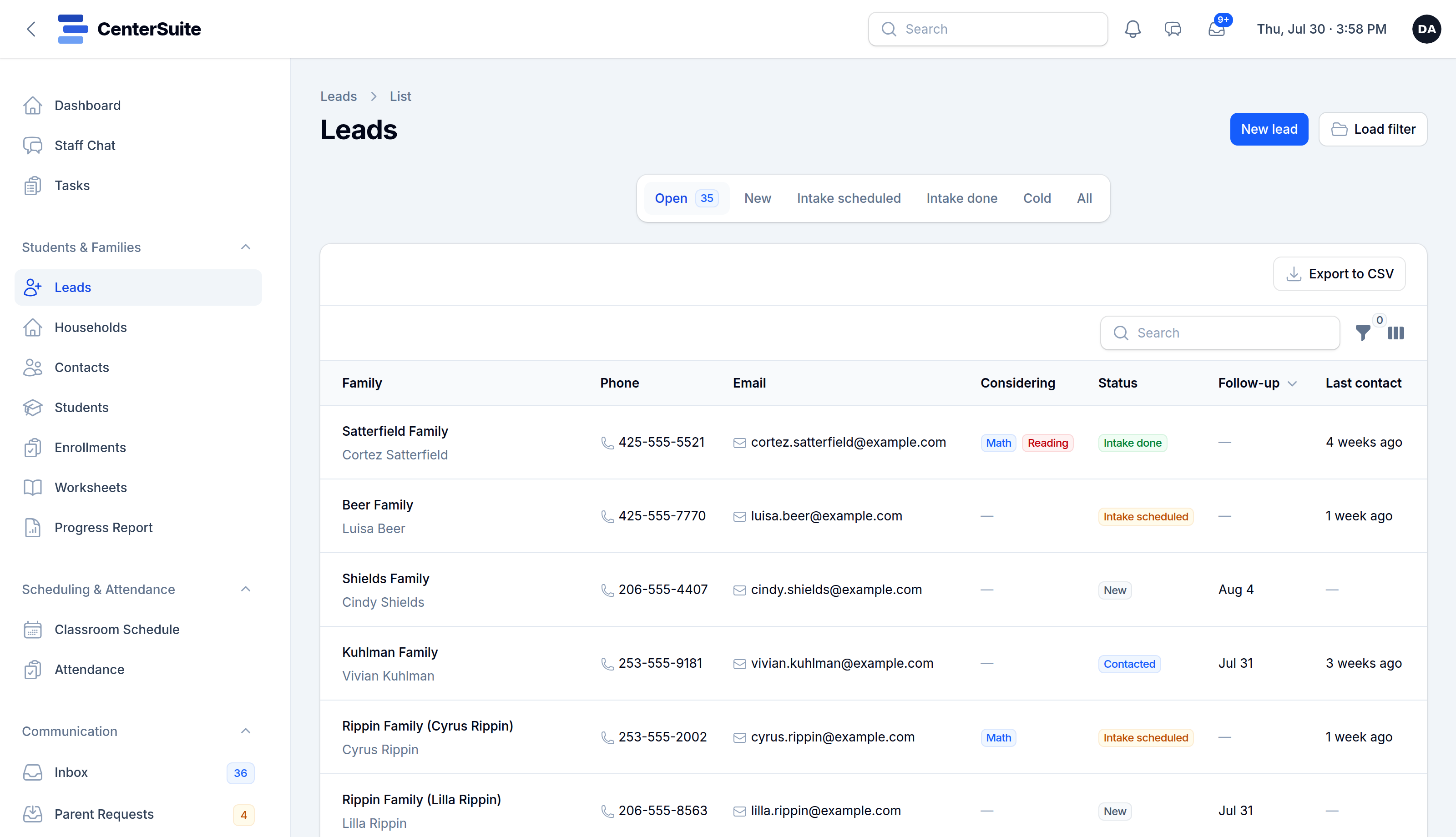
- Before enrollment — capturing inquiries, tracking where they came from and what they're interested in, and following up until they enroll or clearly don't.
- After enrollment — holding the full family record: students, enrollments, schedule, attendance, messages, billing, and history, all in one place.
The magic is when those two halves are the same system. A prospect who enrolls carries their whole history forward instead of being re-typed into a different tool.
When it's worth it
You probably don't need a standalone, generic CRM bolted onto your center. What you need is for the CRM job to be built in to how you run — so your families, your schedule, your messages, and your follow-ups aren't living in separate places that don't talk.
Signs it's time:
- Inquiries are slipping because follow-up depends on someone remembering.
- Answering a parent means checking several tools.
- You can't easily pull a list — "families who paused this term," "leads from the spring open house."
- Your "system" is really you.
A center-native platform folds the CRM job into everything else, so managing relationships isn't a separate task — it's just how the front desk already works.
Want to see relationships, records, and follow-up in one place? Explore CenterSuite, or try the live demo.