
Hiring and Keeping Part-Time Staff at a Learning Center
Ask a Center Director what keeps them up at night and staffing comes up fast. Most learning centers run on part-time help: high school students, college students, a retired teacher or two, working a few afternoons a week. They're often wonderful with students. They also have exams, sports, new class schedules every semester, and plenty of other places they could work.
Turnover will never be zero. But a few habits make hiring easier, training faster, and the good people more likely to stay.
Hire for reliability and warmth, then teach the rest
You can teach someone to grade a worksheet or run check-in. It's much harder to teach them to show up on time, stay patient with a frustrated eight-year-old, and speak kindly to a parent at the door. In interviews, ask about things that show those qualities: a job or team where they had to be dependable, a time they helped someone younger learn something.
A short paid trial shift tells you more than any interview. Watch how they talk to students and whether they ask questions when they're unsure.
Make training a checklist, not a memory
New staff learn by shadowing, which is good, but shadowing alone means each person learns a slightly different version of the job. Write down the basics in one place: how check-in works, how to grade and record work, what to do when a parent asks about billing, who to ask when something goes wrong.
Then turn it into a first-week checklist the new hire works through with a lead. It saves your experienced staff from explaining the same things every semester, and it means nobody gets forgotten.
Schedule around their lives, not against them
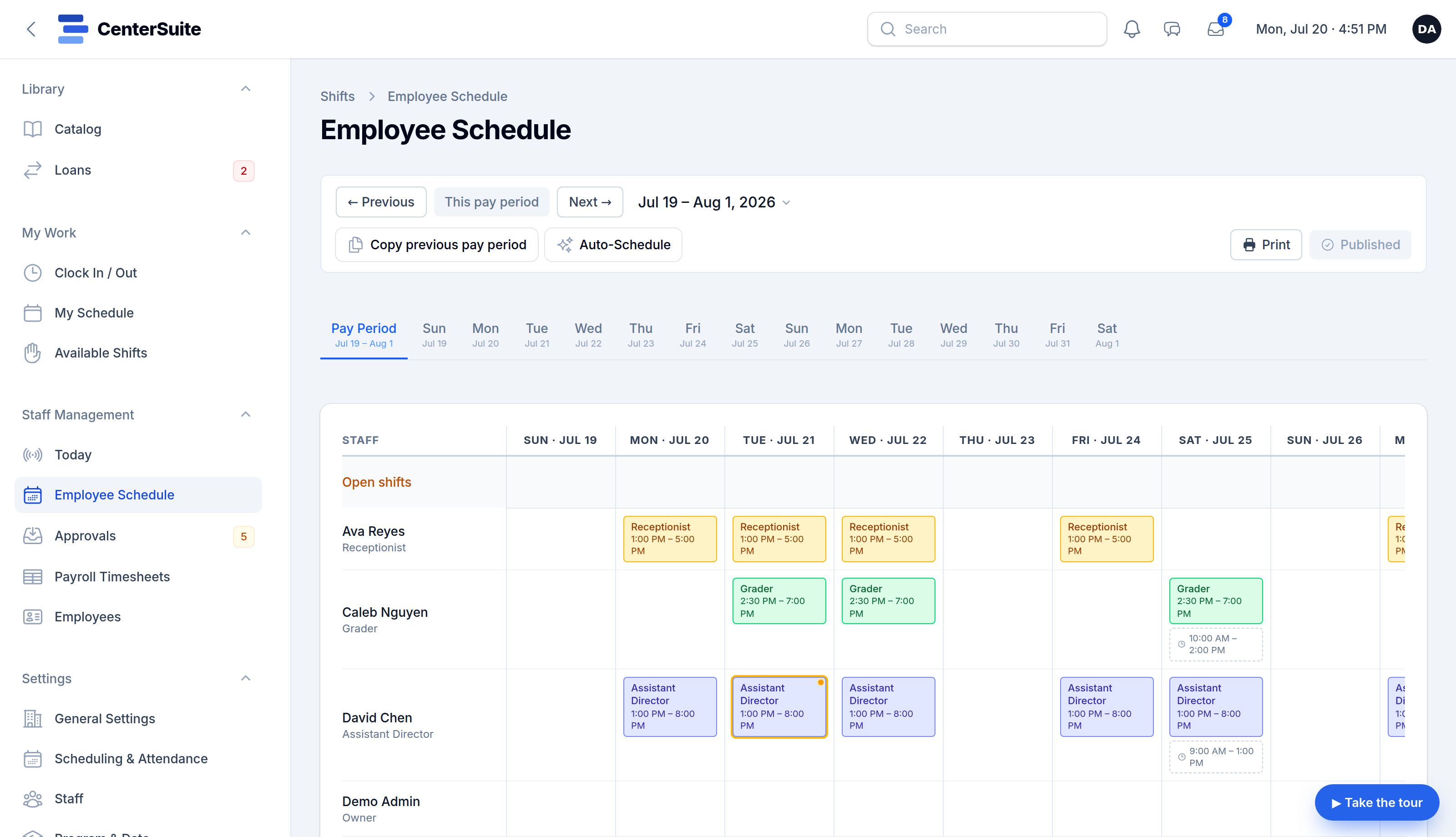
Student schedules change every term. Ask for availability before each semester starts and build shifts from it, rather than building the schedule first and asking people to fit. When someone's availability changes mid-term, make it easy for them to tell you, and easy for you to see who can cover.
It also helps to let staff offer a shift they can't work to a teammate, with you approving the swap. A covered shift is better than a no-show, and people stay longer at a job that bends a little when life gets busy. If you're still juggling this in a spreadsheet, our guide to time clocks and payroll covers the next step.
Keep the ones who are good
Small things matter more than you'd think:
- Consistent hours. People leave when their hours swing wildly from week to week.
- Clear pay, on time. Accurate timesheets and no surprises on payday.
- Recognition. Tell them when a parent mentioned them by name, or when a student they work with moved up a level.
- A path. A reliable grader can become a lead, train new hires, or open and close the center.
When someone does leave, ask why. Patterns in those answers are as useful as the reasons families give for leaving, which we covered in our piece on student retention.
Make the work itself easier
Much of what wears part-time staff down is friction: hunting for today's schedule, not knowing who's covering, clocking in on paper, texting the director to ask what changed. Putting the schedule, the clock and staff messages in one platform everyone can reach from their phone takes a surprising amount of that weight off.
Good staff make a center. The more predictable and supported their job feels, the longer they'll stay with you.
Keep reading
 Staff & payroll
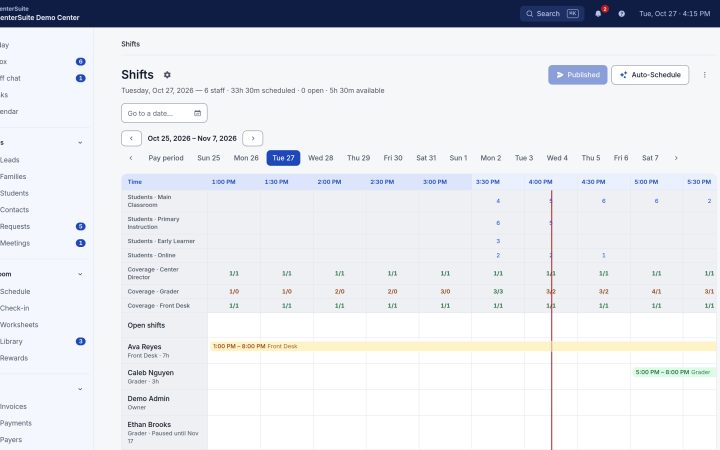
Staff Scheduling and Time Clocks: Getting Payroll Right Without the Spreadsheet
Shifts, punches, missed clock-outs and payroll eat hours every pay period. A simpler way to run staff scheduling and the time clock.
 Families & communication
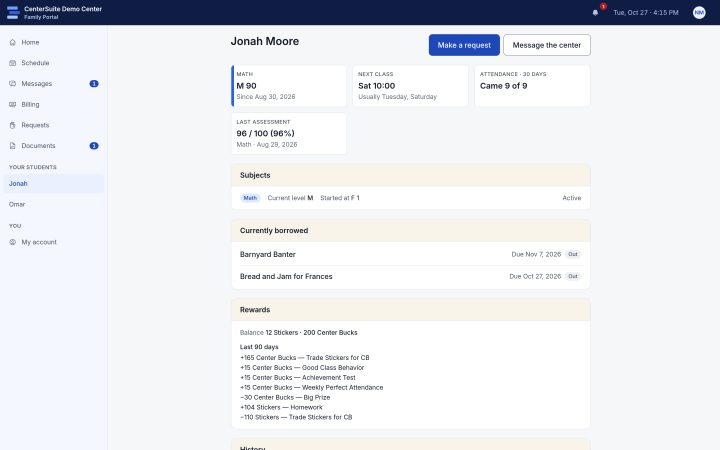
A Family Portal Cuts Front-Desk Calls. Here's How.
Most front-desk calls are questions families could answer themselves. How a family portal takes them off your desk, and what to put in it.
 Running your center
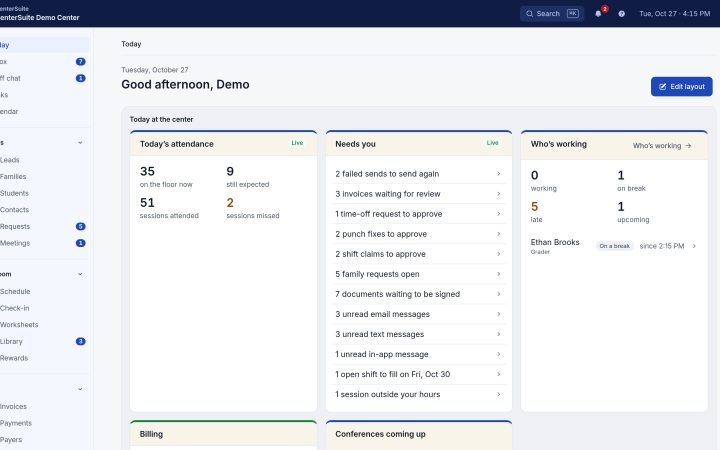
Five Numbers Every Center Director Should Check Weekly
You don't need a stack of reports to know how your center is doing. Five numbers, checked weekly, that tell you where to act before problems grow.