
10DLC, Explained for Small Centers (and Why Your Texts Might Not Be Delivering)
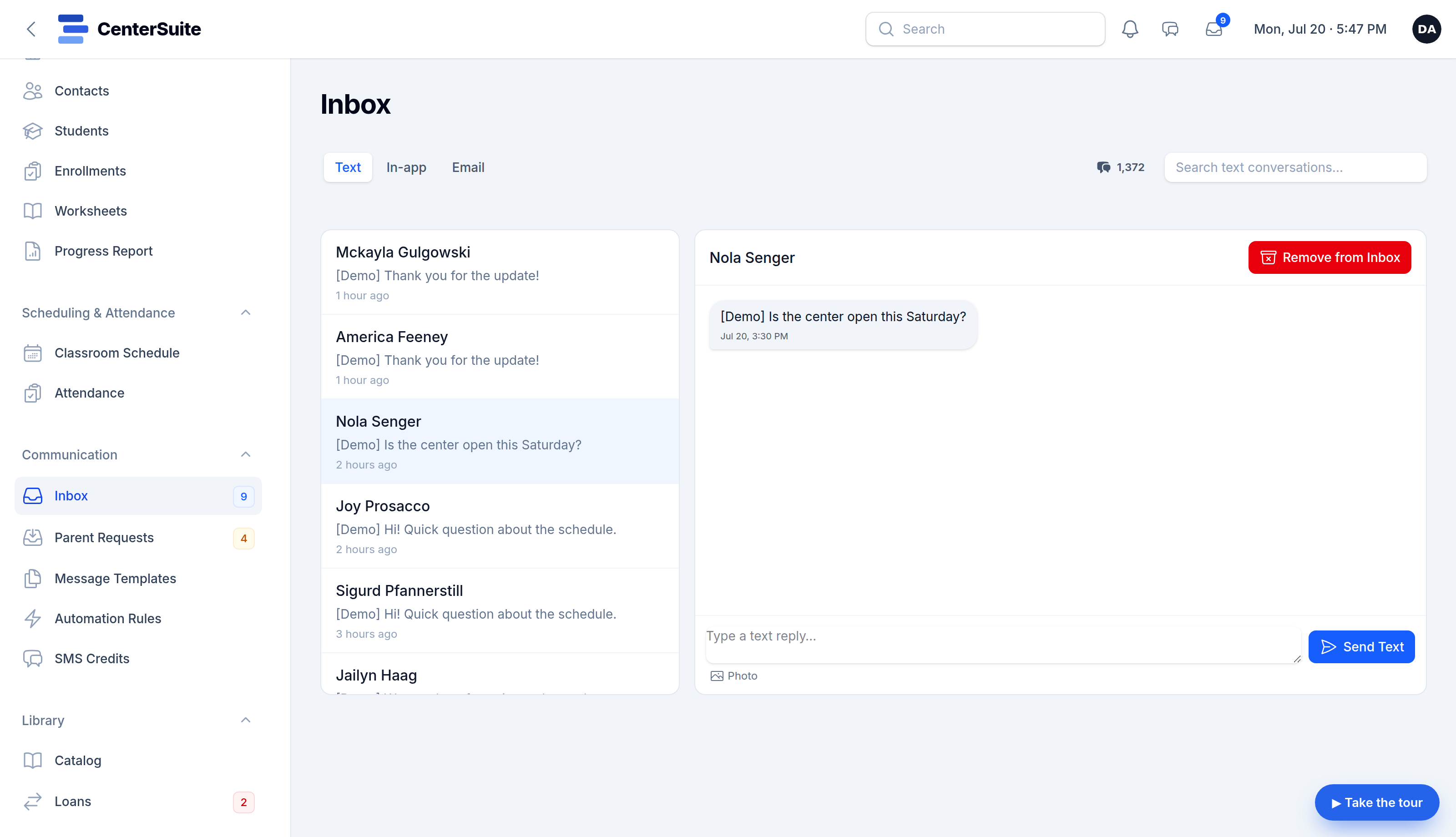
If you've ever sent a class reminder to thirty families and wondered why a chunk of them swore they never got it, the answer might not be "they weren't paying attention." It might be 10DLC.
What 10DLC actually is
10DLC stands for "10-digit long code" — an ordinary local phone number used to send application-to-person (A2P) texts, meaning messages sent by software rather than typed one-by-one from a phone. A few years ago, US carriers (AT&T, Verizon, T-Mobile, and the rest) started requiring every business that sends A2P texts to register first. Unregistered business texting gets filtered — quietly. No bounce, no error you'll notice. The message just doesn't arrive.
So a center texting families from an unregistered number can look like everything's working — the software says "sent" — while a real percentage of messages never land.
What registration involves
Registration has two parts:
- A brand — your business identity (legal name, address, contact). This is a one-time registration.
- A campaign — a description of what you text about (reminders, schedule changes, billing notices) with a couple of sample messages and how families opted in.
For a single center, there's a lightweight path called a Sole Proprietor registration — no EIN required, low cost, designed for small businesses. Centers organized as an LLC or corporation register a Standard brand using their EIN. Either way, approval is handled by the carriers and takes anywhere from a few minutes to a few days.
The part everyone gets stuck on: opt-in
The single most common reason a registration gets rejected is opt-in proof — carriers want to see how people agreed to receive your texts. A center that collects mobile numbers on an enrollment form and a clear consent line ("I agree to receive text updates… reply STOP to opt out") is in great shape. A center with no documented consent is not.
This is non-negotiable, and it's good practice anyway: only text families who've actually said yes, always offer STOP to unsubscribe and HELP for help, and never share opt-in data.
How to make this painless
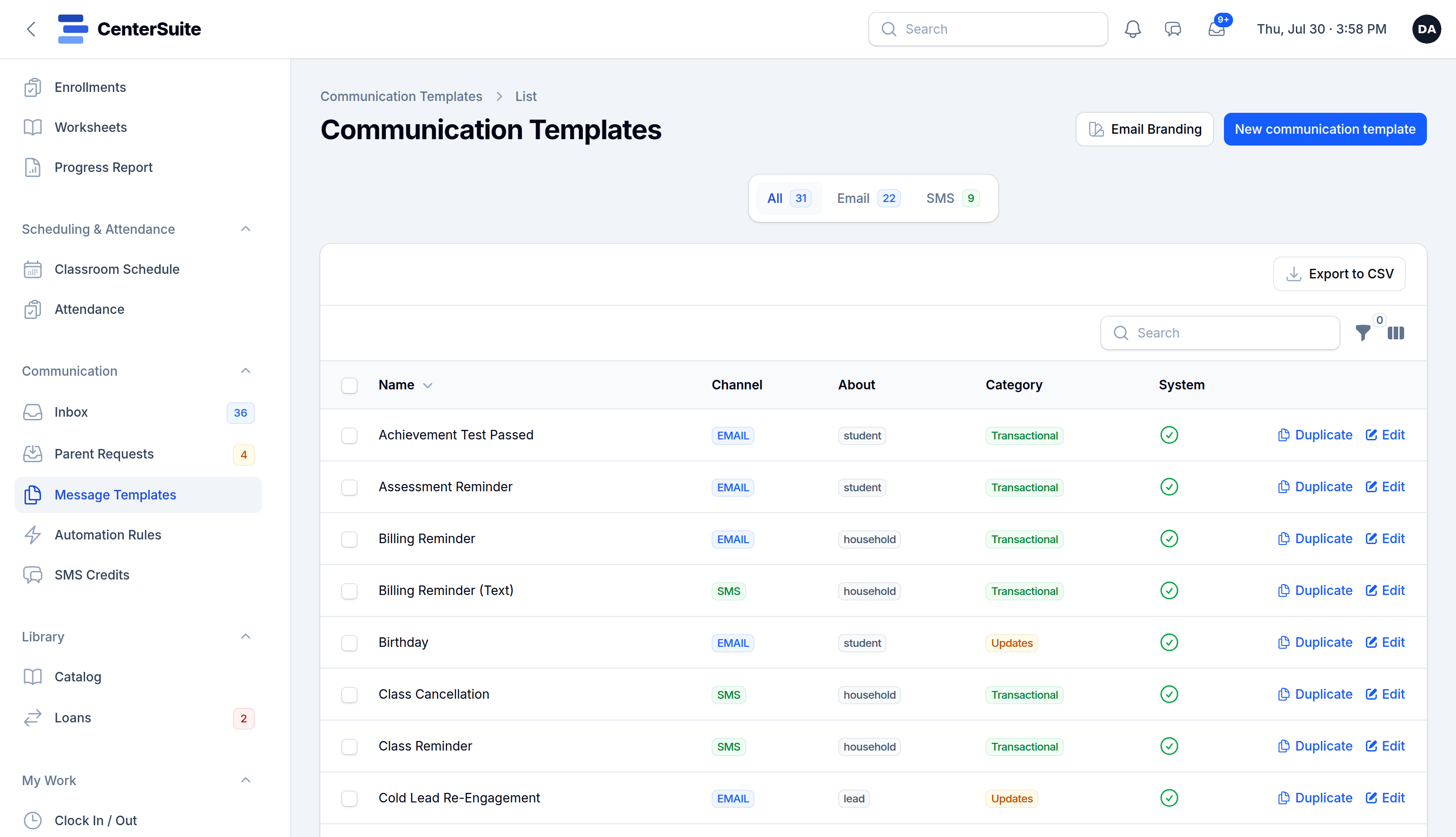
The honest truth is that 10DLC is tedious — most small centers don't have a compliance person, and the carrier portals aren't friendly. The right software handles it for you: it registers your brand and campaign behind the scenes, hosts a compliant consent page you can point families to, gates sending until you're approved, and manages STOP/HELP automatically.
That's exactly how CenterSuite does it — you fill in your business details once, and the texting "just works," delivering reliably to the families who opted in. See it on a live demo set up for a center like yours.